Monday
01 June 2026, 18 Joishtho 1433 Bengali

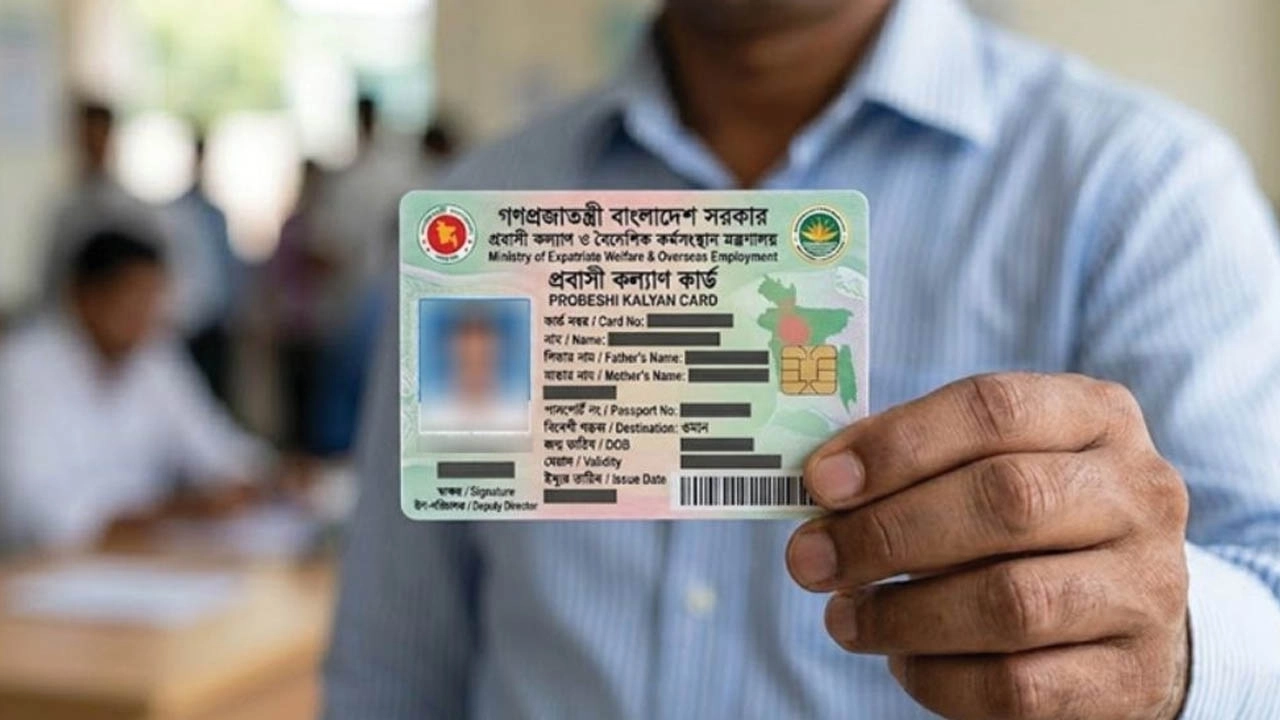

After the family card and farmer card, the expatriate card is being newly introduced in Bangladesh. According to the government's announcement, this card is going to be launched in the hands of expatriate citizens within the next two months.
While in the United States, Expatriate Welfare Minister Ariful Haque Chowdhury said on Sunday that the government is going to launch this expatriate card to encourage remittances through legal channels.
This information was revealed in a BBC Bangla report. It mentioned that expatriate citizens have various questions about what kind of benefits they will get if this card is introduced normally. The Bureau of Manpower Employment and Training Card or BMET Card has already been in operation for expatriate Bangladeshis.
This card is mainly given to those who are registered with the Bureau of Manpower Employment and Training (BMET) to legally work abroad.
All the information of the worker holding this card is stored in the government database. As a result, if he faces any danger, he can be easily identified and the government immediately provides the necessary assistance. After the BMET card for expatriates, the expatriate card is being newly introduced.
There is also a question among expatriate citizens about what additional benefits this card will have. In response, the Ministry of Expatriate Welfare says that along with the BMET card, new banking or financial features will also be added to the expatriate card. Apart from this, some additional benefits will be available through this card.
State Minister for Expatriate Welfare Md. Nurul said that the information contained in the BMET card will also be present in the Expatriate Card. However, this card will have some additional benefits, along with the banking system being linked to this card.
Immigration experts say that the BMET card that was previously issued by the government was not of much use to expatriate Bangladeshis. The government will also have to ensure that citizens truly benefit from this card when it is reintroduced.
What is an expatriate card and why?
The government does not have the exact number of Bangladeshi expatriates in various countries around the world, including the Middle East, Europe, and America. However, the Ministry of Expatriate Welfare has said that according to the information they have, the number of Bangladeshi expatriates is at least 15 million. Apart from this, there are many Bangladeshi expatriates in various countries around the world, but the government does not have the exact statistics.
After taking office, the BNP government led by Tarique Rahman has introduced many new cards including the farmer card and family card. In continuation of which, the launch of the 'Probashi Card' for Bangladeshis living abroad has also been announced. The government has said that the government has taken the initiative to launch a card called 'Probashi Card' to encourage expatriate workers to send remittances through legal channels. This card will act as a digital identity card and service card for expatriates, through which they will get various government and financial benefits inside and outside the country.
State Minister for Expatriate Welfare and Overseas Employment Md. Nurul Haque told BBC Bangla, 'Expatriate citizens can also use this card as an alternative to a passport. At any time, if anyone wants to know about it, there will be a QR code, which, if scanned, will show the details of the expatriate citizens. This card can also be used via mobile, the cardholder does not have to carry it with him.'
Before the election, the BNP manifesto said that a 'Probasi Card' would be issued, which would preserve information, skills and job conditions. It would also be linked to bank payment gateways and provide the facility of easy remittance sending.
The benefits that will be
The BMET card was introduced during the ousted Awami League government to allow workers to legally travel abroad. Without this card, no worker will be able to travel abroad legally. According to the BNP manifesto, this expatriate card will provide additional incentives for remittances and social security to expatriates returning to the country.
Expatriate citizens say that many of them still do not know what benefits they will receive if they get this card or how important this card is for them.
Shahriar Tarek, a Malaysian expatriate, said, "Expatriates get some benefits through the BMET card. Even then, many expatriates are harassed at the airport or in Bangladesh while accessing citizen benefits. It is a big question for them as to how much protection this card will actually provide."
In response, State Minister for Expatriate Welfare and Overseas Employment Md. Nurul Haque said that a major aspect of this card is economic. Explaining this, he said that whoever has this expatriate card linked to the banking system can use it in the dual currency card system. In that case, he can spend in the currency of the country where he lives and at the same time he can spend in Bangladeshi taka.
Nurul Haque said, "If an expatriate wants to buy something for his family in that country through online payment with his card, he can do that too through this expatriate card."
Explaining the purpose of launching the expatriate card, the state minister said, "Sometimes the money sent by those living outside the country is often spent by their relatives or family members. If this card is launched, the family will be able to spend a certain amount of money. They will not be able to spend unlimited money."
According to the government's announcement, expatriate cities will be established for expatriates from divisional cities to district cities. In this case, those who have this expatriate card will get special privileges in purchasing housing or plots in expatriate cities, the state minister said.
State Minister Nurul Haque said, "Apart from this, all the existing benefits including BMET insurance and financial compensation will also remain on the expatriate card."
He said, "We will try to ensure that citizens have this card in their hands. When they go to the airport, they will get their due respect by using this card or they will not be subjected to harassment - these issues will also be included in this card."
Who will get it, how much is it important?
There is some confusion among expatriates about this card. The first is that many expatriate Bangladeshis have gone to study in different countries of the world and later got involved in employment. Most of them do not have this BMET card.
Ishtiaq Asif from the United Arab Emirates told BBC Bangla, "Expatriates have a visa for the country they are in on their passports. So why do they have to get a separate expatriate card to get benefits? They are sending remittances, isn't that enough to prove themselves as remittance warriors?"
In response, the ministry says that the government has information on 80 percent of the expatriates currently living in different countries around the world. When the government provides special benefits to this card, perhaps many people will be interested in accepting this card.
State Minister Noor said that initially, expatriate cards will be given to those who have BMET cards. In this case, the government is considering registering those cardholders to get new expatriate cards.
Is there any fee to pay in this case? In response, State Minister Noor said, 'Earlier, a fee was charged to get a BMET card. Those who have a BMET card may not have to pay a fee. New members can register and get this card by paying a fee. In that case, a registration fee may be required for new members.' In this case, he also said that this card can be delivered to expatriates through Bangladesh embassies in different countries.
Immigration expert Professor Tasneem Siddiqui said, "The BMET card that was given earlier was not really useful. There were many things in that card too. It was thought that with that, he would be able to send remittances, see, but none of these things happened that way." For this reason, he also suggests thinking about how effective it can be before introducing a new expatriate card.
